
How Can I Ovulate Naturally with PCOS? 3 Clinical Tips to Restore Your Rhythm
Every month, do you hold your breath as your period approaches? And every month, are you met with the same crushing disappointment and tears of defeat?
It shouldn’t be this hard.
When I speak with women in my clinic, they often tell me that while pregnancy is the ultimate goal, they first just want to know their body is working. They want the biological confidence that comes with a natural ovulatory cycle. If you feel like your body is failing at the one thing it was designed to do, you are in the right place.
Today, I’m sharing 3 powerful clinical tips to help you move past the "band-aid" approach and learn how to ovulate naturally with PCOS.

What is PCOS—And Why Does It Stall Ovulation?
Polycystic Ovarian Syndrome (PCOS) is the leading cause of female infertility, but it is often misunderstood. In clinical terms, PCOS is a syndrome, meaning it is a collection of symptoms rather than a single "broken" part.
To receive a diagnosis, you typically meet two of the three "Rotterdam Criteria":
Ovulatory Dysfunction: Irregular or absent periods.
Polycystic Ovaries: The presence of many small follicles (the "string of pearls") visible on an ultrasound.
Hyperandrogenism: Elevated "male" hormones like Testosterone or DHEA-S.
The "Follicle Trap"
Ovulation is the release of a mature egg from the ovary. In a healthy cycle, one follicle becomes dominant and "bursts" to release the egg.
In PCOS, hormonal "static" causes the follicles to stall. They get stuck in the Follicle Trap, never reaching full maturity, which results in a missed cycle and a negative pregnancy test.
Signs You Aren't Ovulating (Even If You Have a Period)
Many women experience "withdrawal bleeds" and assume they are fertile, but a period does not always equal ovulation. Signs of anovulation include:
Long or Absent Cycles: Going months or years between periods.
"Static" OPKs: Ovulation Predictor Kits that never show a clear peak, or stay "high" for days.
Flat Basal Body Temperature (BBT): No distinct rise in temperature in the second half of your month.
Low Progesterone: Lab results showing low levels on day 21 of your cycle.
For a deeper dive into the science of the egg itself, see my definitive guide on egg quality.
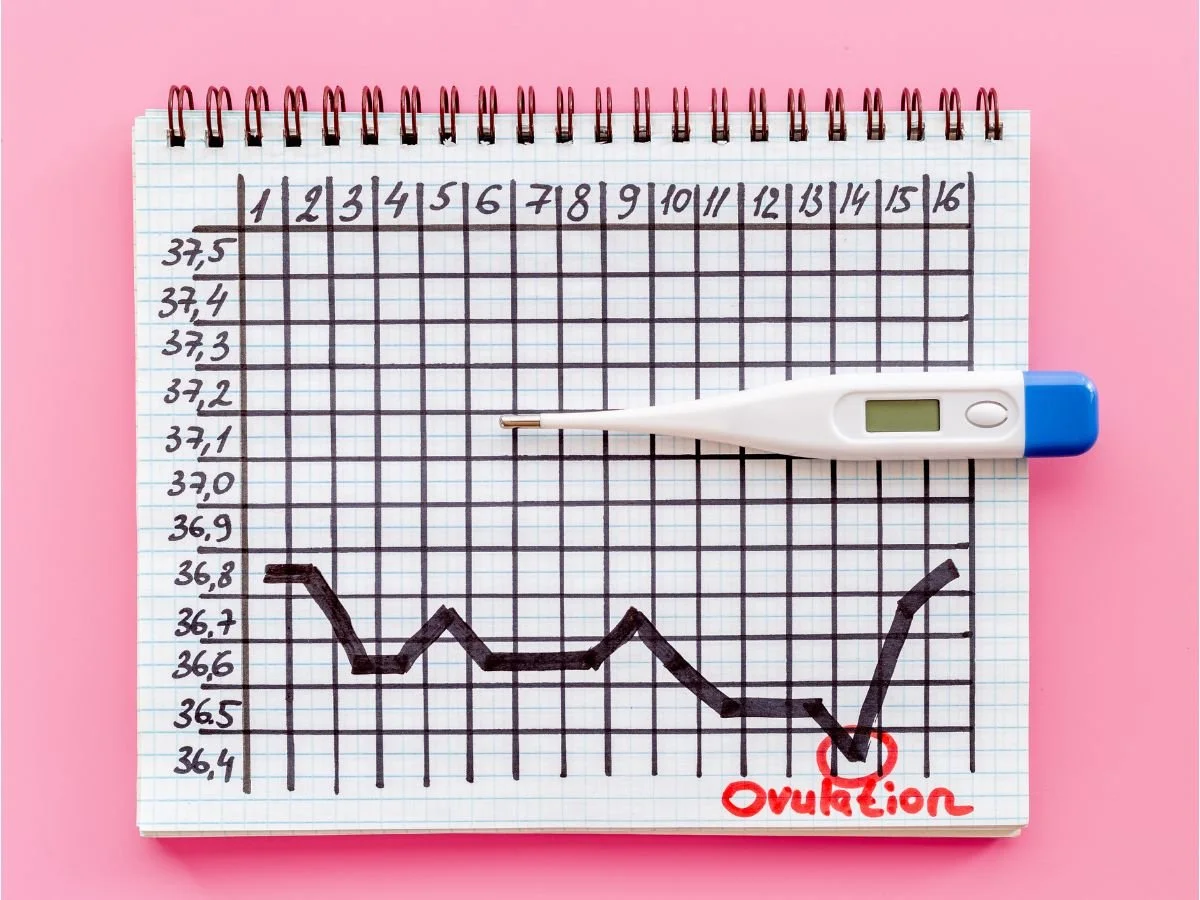
How Can I Ovulate Naturally with PCOS? My Top 3 Clinical Tips
Tip #1: Identify Your Unique PCOS Root Cause
There is no "one-size-fits-all" PCOS. To trigger ovulation, you must first identify which of the four PCOS types is silencing your fertility signals:
Insulin-Resistant PCOS: Excess insulin drives the ovaries to produce too much testosterone, which directly shuts down the ovulation process.
Adrenal PCOS: A dysregulated stress response leads to blood sugar instability and progesterone depletion.
Post-Pill PCOS: A temporary but frustrating hormonal "rebound" after stopping oral contraceptives.
Inflammatory PCOS: Chronic inflammation from digestive issues or autoimmune conditions (like Hashimoto’s) creates a "Survival Mode" environment where the body de-prioritizes reproduction.
The Strategy: Once you identify your type, you can stop using generic supplements and start a targeted plan.
Tip #2: Evaluate Labs from an "Optimal Fertility" Perspective
This is where most women get stuck. They are told their labs are "normal," yet they still aren't ovulating.
The "Standard Reference Range" used by most labs is designed to identify disease, not to optimize fertility. For example:
TSH (Thyroid): A lab might say 4.5 is "normal," but for fertility, we want to see it closer to 2.0.
Vitamin D & Ferritin: These must be at optimal levels to provide the "cellular fuel" required for an egg to burst through the ovarian wall.
The Strategy: Don't settle for "normal." Ensure your labs are reviewed by a specialist who understands Optimal Fertility Ranges.

Tip #3: Restore Your Cyclical Hormone Rhythm
Ovulation is a symphony. Estrogen, Progesterone, LH, and FSH must rise and fall in a perfect, 28-to-35-day rhythm. If these hormones are "flatlining" or peaking at the wrong time, ovulation cannot occur.
Testing these hormones at specific points in your cycle gives us a map of where the rhythm is breaking down.
Once we clear the "metabolic static" (Tip #1) and optimize your nutrients (Tip #2), your cyclical hormones can finally return to their natural dance.
Summary: From Band-Aids to Biology
Too often, women are handed a prescription for Letrozole or Clomid as a first resort. While these medications have their place, they are often "forcing" a result on a foundation that isn't ready.
By following these three steps—Identifying your type, Optimizing your labs, and Restoring your rhythm—you aren't just trying to "get pregnant." You are healing your underlying biology.
Even if you eventually choose to use medication, this "Foundation First" approach ensures your body is actually ready to respond.
Are you tired of feeling like your fertility is a guessing game?
If you are not ovulating naturally and feel like time is running out every cycle, it’s time for a clinical pivot. You don’t need more "tips" from Instagram; you need a strategic deep-dive into your specific biology.
In my PCOS Fertility Audit, we move past the "standard" advice and get to the root of your ovulatory dysfunction.
In this 1:1 session, we will:
Uncover Your Specific PCOS Type: No more guessing if you are "Inflammatory" or "Insulin Resistant."
Review Your "Normal" Labs: I’ll look for the optimal fertility gaps your standard GP might have missed.
Identify the "Survival Alarms": We’ll pinpoint exactly what is stalling your follicles and keeping you in the "Follicle Trap."
Stop holding your breath every month and start taking action with a plan engineered for your unique body.
